El Chequeo de Origen: ¿Qué tan regional es realmente tu compra?
📅 8 de julio de 2026
⏱️ Tiempo de lectura: aprox. 4 minutos
✍️ Por la Redacción de EuroScan
¿Quién no disfruta en el supermercado de productos que saben a hogar? Etiquetas cuidadosamente diseñadas con verdes prados, molinos o nombres de pueblos regionales nos transmiten la buena sensación de apoyar directamente la economía local y a los agricultores de la zona. Pero las apariencias a menudo engañan enormemente.
Detrás de la idílica fachada, en el comercio moderno se esconde un fenómeno que los expertos denominan **regionalidad aparente** o ilusión de marca. Muchas marcas tradicionales con apariencia regional pertenecen en realidad a conglomerados alimentarios globales. Así, la creación de valor y los beneficios no fluyen hacia la región, sino hacia paraísos fiscales o sedes de holdings extranjeros.
Los trucos de los diseñadores de envases
Los departamentos de marketing saben exactamente cómo apelar a nuestro anhelo de naturalidad y hogar. Utilizan hábilmente términos geográficos, escudos históricos o eslóganes como „De la región“ o „Receta tradicional“.
Legalmente, estos términos apenas están protegidos. Un producto puede ser anunciado como „regional“ incluso si las materias primas provienen del otro lado del mundo y en el lugar solo se realiza el envasado final. Así, un ingrediente de ultramar se convierte de repente en un producto supuestamente regional mediante un simple proceso de embotellado en Europa.
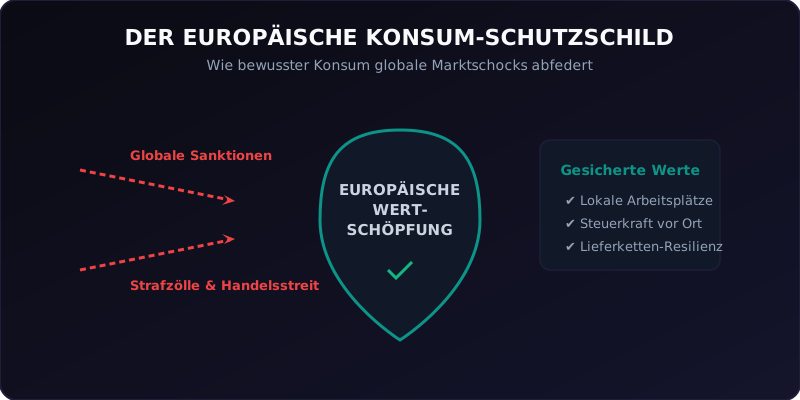
Ilustración 1: Cómo el consumo consciente actúa como escudo protector para los empleos europeos.
¿Quién posee a quién? Una mirada detrás del estante
Ejemplos conocidos se encuentran en casi todas las secciones:
- Productos lácteos: Una lechería alpina tradicional, con sonido bávaro u austriaco, a menudo pertenece a un gran consorcio francés como Lactalis.
- Agua mineral: La fuente local y apreciada en el pueblo vecino a menudo es operada secretamente por Nestlé o Danone.
- Clásicos: Marcas tradicionales de origen europeo en el sector del té o las especias son hoy a menudo filiales de Unilever o de holdings estadounidenses.
"La verdadera regionalidad no se mide por el sentimiento de hogar en la etiqueta, sino por las relaciones de propiedad reales de la empresa matriz."
Cómo EuroScan descubre la verdad
Como consumidor, en el ajetreo diario de las compras, es imposible tener en mente las estructuras de propiedad de cientos de marcas de bienes de consumo rápido. Aquí es precisamente donde entra en juego la **aplicación EuroScan**.
Al escanear el código de barras, la aplicación no solo verifica en tiempo real el código de registro GS1 del código de barras, sino que también compara al fabricante con nuestra detallada base de datos corporativa. El semáforo te muestra la verdad al instante:
- 🟢 Verde: La marca y la empresa matriz están firmemente en manos europeas y operan localmente.
- 🟡 Naranja: El origen es mixto o la información no es clara.
- 🔴 Rojo: A pesar de una presentación de apariencia europea, los beneficios fluyen hacia holdings de ultramar.
Toma el poder de tu consumo en tus manos. No te dejes engañar por hermosos paisajes en el cartón – ¡escanea tus productos con EuroScan y apoya a los verdaderos productores locales!

Descarga la aplicación EuroScan desde la App Store
Abre la cámara de tu teléfono para escanear el código QR. También puedes buscar 'EuroScan' en la App Store.

Descarga la aplicación EuroScan desde Google Play Store
Abre la cámara de tu teléfono para escanear el código QR. También puedes buscar 'EuroScan' en Google Play Store.


Der Herkunfts-Check: Wie regional ist dein Einkauf wirklich?
📅 8. Juli 2026
⏱️ Lesezeit: ca. 4 Minuten
✍️ Von EuroScan Redaktion
Wer greift im Supermarkt nicht gerne zu Produkten, die nach Heimat schmecken? Liebevoll gestaltete Etiketten mit grünen Wiesen, Mühlen oder regionalen Dorfnamen vermitteln uns das gute Gefühl, die heimische Wirtschaft und lokale Landwirte direkt zu unterstützen. Doch der Schein trügt oft gewaltig.
Hinter der idyllischen Fassade verbirgt sich im modernen Handel ein Phänomen, das Experten als **Schein-Regionalität** oder Marken-Illusion bezeichnen. Viele traditionsreiche, regional wirkende Marken gehören in Wahrheit längst globalen Lebensmittel-Mischkonzernen. Die Wertschöpfung und die Gewinne fließen so am Ende nicht in die Region, sondern in Steueroasen oder ausländische Holding-Zentralen.
Die Tricks der Verpackungsgestalter
Marketing-Abteilungen wissen genau, wie sie unsere Sehnsucht nach Natürlichkeit und Heimat ansprechen. Sie nutzen geschickt geografische Begriffe, historische Wappen oder Slogans wie „Aus der Region“ oder „Traditionelle Rezeptur“.
Gesetzlich sind diese Begriffe kaum geschützt. Ein Produkt darf als „regional“ beworben werden, selbst wenn die Rohstoffe vom anderen Ende der Welt stammen und vor Ort lediglich die Endverpackung stattfindet. So wird aus einer Übersee-Zutat durch einen einfachen Abfüllprozess in Europa plötzlich ein vermeintlich regionales Produkt.
Abbildung 1: Wie bewusster Konsum als Schutzschild für europäische Arbeitsplätze wirkt.
Wer besitzt wen? Der Blick hinter das Regal
Bekannte Beispiele finden sich in fast jeder Abteilung:
- Molkereiprodukte: Eine traditionelle, bayerisch oder österreichisch klingende Alpen-Molkerei gehört oft zu einem französischen Großkonzern wie Lactalis.
- Mineralwasser: Die lokale, geschätzte Quelle im Nachbarort wird oft heimlich von Nestlé oder Danone betrieben.
- Klassiker: Ur-europäische Traditionsmarken im Bereich Tee oder Gewürze sind heute oft Töchter von Unilever oder US-amerikanischen Holdinggesellschaften.
"Echte Regionalität bemisst sich nicht nach dem Heimatgefühl auf dem Etikett, sondern an den realen Besitzverhältnissen des Mutterkonzerns."
Wie EuroScan die Wahrheit aufdeckt
Als Verbraucher ist es im stressigen Einkaufsalltag unmöglich, die Besitzverhältnisse von hunderten FMCG-Marken im Kopf zu haben. Genau hier setzt die **EuroScan App** an.
Durch das Scannen des Barcodes prüft die App in Echtzeit nicht nur den GS1-Registrierungscode des Barcodes, sondern vergleicht den Hersteller mit unserer detaillierten Konzern-Datenbank. Die Ampel zeigt dir sofort die Wahrheit:
- 🟢 Grün: Marke und Mutterkonzern sind fest in europäischer Hand und wirtschaften lokal.
- 🟡 Orange: Die Herkunft ist gemischt oder die Datenlage unklar.
- 🔴 Rot: Trotz europäisch wirkender Aufmachung fließen Gewinne an Übersee-Holdings ab.
Nimm deine Konsummacht in die Hand. Lass dich nicht von schönen Landschaften auf der Pappe täuschen – scanne deine Produkte mit EuroScan und unterstütze die echten Macher vor Ort!
Lade die EuroScan App aus dem App Store herunter
Scanne den QR-Code mit deiner Smartphone-Kamera. Alternativ kannst du im App Store nach 'EuroScan' suchen.
Lade die EuroScan App aus dem Google Play Store herunter
Scanne den QR-Code mit deiner Smartphone-Kamera. Alternativ kannst du im Google Play Store nach 'EuroScan' suchen.
The Origin Check: How Regional is Your Purchase Really?
📅 July 8, 2026
⏱️ Reading time: approx. 4 minutes
✍️ By EuroScan Editorial Team
Who doesn't love reaching for products in the supermarket that suggest a taste of home? Beautifully designed labels with green meadows, traditional mills, or local village names give us the good feeling of supporting domestic agriculture and local jobs. But appearances are often highly deceptive.
Behind the idyllic facade in modern grocery stores lies a phenomenon known as **pseudo-regionality** or brand illusion. Many long-standing brands that feel local are actually owned by multinational food conglomerates. The added value and the profits do not stay in your community; they flow directly into tax havens or overseas corporate holdings.
The Packaging Designers' Tricks
Marketing departments know exactly how to appeal to our desire for authenticity and proximity. They use geographic terms, historic coat-of-arms, or slogans like "local traditional recipe."
Legally, these terms are barely protected. A product can be advertised as "regional" even if the raw ingredients come from the other side of the globe and only the final packaging step takes place locally. Through a simple bottling process, an overseas ingredient is transformed into a supposedly local product.
Figure 1: How conscious consumption acts as a shield to protect European jobs.
Who Owns Whom? Looking Behind the Shelf
Familiar examples can be found in almost every aisle:
- Dairy Products: A traditional, local-sounding alpine dairy often belongs to a French dairy giant like Lactalis.
- Mineral Water: The local spring you trust is often quietly owned and bottled by Nestlé or Danone.
- Classics: European heritage tea or spice brands are now subsidiaries of Unilever or US-based private equity firms.
"True regional value is not determined by the feeling of home on the label, but by the actual ownership structure of the parent company."
How EuroScan Uncovers the Truth
As a consumer, it is impossible to memorize the ownership trees of hundreds of FMCG brands during your daily grocery run. That is exactly where the **EuroScan App** comes in.
By scanning the barcode, the app checks the GS1 registration code and matches the manufacturer with our detailed corporate database in real time. The traffic light shows you the truth instantly:
- 🟢 Green: Brand and parent company are firmly in European hands and create local value.
- 🟡 Orange: Mixed origin or unclear corporate data.
- 🔴 Red: Despite a local appearance, profits flow to overseas holdings.
Take charge of your buying power. Don't let pretty cardboard landscapes fool you – scan your products with EuroScan and support the real producers in your region!
Download the EuroScan App from the App Store
Open the camera on your phone to scan the QR code. You can also search 'EuroScan' on the App Store.
Download the EuroScan App from the Google Play Store
Open the camera on your phone to scan the QR code. You can also search 'EuroScan' on the Google Play Store.